For the past six years, we have worked with the Vivensa Foundation to support early career hearing researchers in the UK, as they work towards becoming independent scientists in the field.
We caught up with some of our Fellows last November at an event organised and hosted by the Vivensa Foundation in London. This event gave our Fellows the opportunity to network, talk about their research, and share their experiences of establishing their careers as independent investigators.
Highlights from the research talks
Five Fellows presented their work, sharing updates on their research:

Emma Kenyon, who completed her RNID Fellowship in 2021, presented her research into how aminoglycoside antibiotics can damage the sound‑sensing hair cells in the inner ear and lead to permanent hearing loss. Her work aims to find ways to prevent this damage.
Emma is now a Lecturer in Neuroscience at Swansea University Medical School. RNID are funding her through its Innovation Seed Fund to investigate the impact of drug-induced hearing loss using anonymised health care and administrative records about the population of Wales.

Prez Jarzebowski (University College London), a current RNID-Vivensa Foundation-funded Fellow presented his work on how the brain compensates when it receives incomplete sound information from the inner ear using prediction alongside other cues such as lipreading.
His work could lead to improvements in hearing aids and other assistive technologies for hearing loss.

Samuel Webb (University of Sheffield) has been awarded one of our 2025 RNID-Vivensa Foundation Fellowships. He presented his plans to study the long-term effects of noise exposure and whether it contributes to age-related hearing loss.
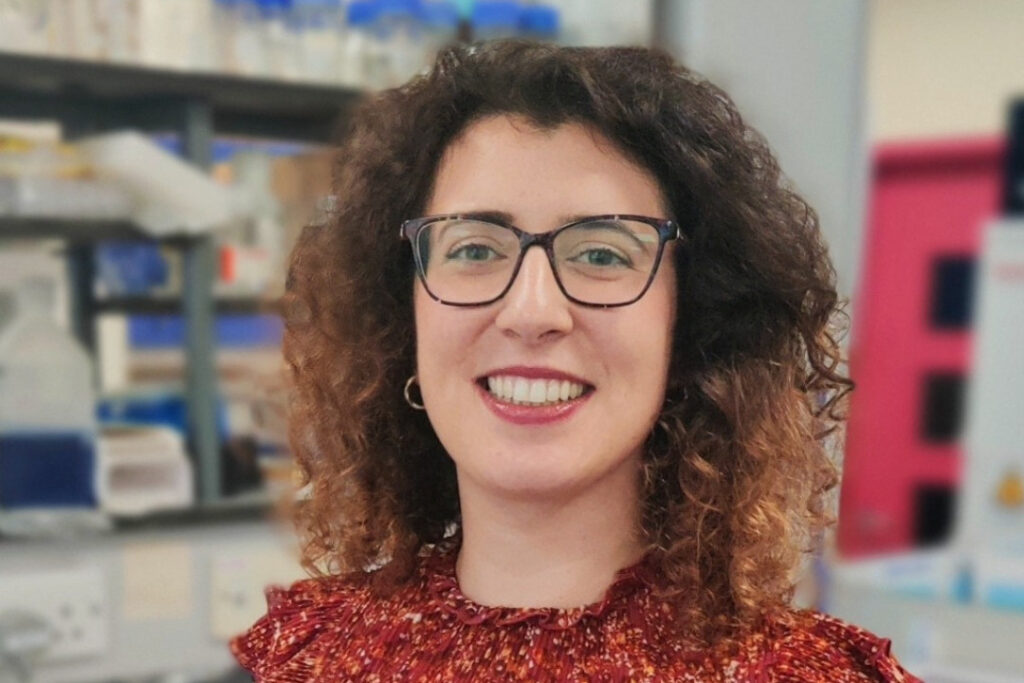
Elisa Martelletti (King’s College London), a current RNID-Vivensa Foundation-funded Fellow, presented her work to investigate the relationship between the immune response and hearing loss. She has identified inflammatory processes that could be targeted with new treatments to protect hearing.

Chris Hardy (University College London) presented the work he started during his Fellowship to develop new hearing tests that can detect early signs of dementia. His 2019-2020 RNID-Vivensa Foundation Fellowship helped him to secure a second Fellowship from the Alzheimer’s Society in 2024.
Reflections on the Fellowships
Following the presentations, Sanjay Thakrar, Director of Research at the Vivensa Foundation, and Ralph Holme, Director of Research at RNID, chaired a discussion session with the Fellows.
They prompted the Fellows to share their experiences and challenges in applying for and securing funding to establish themselves as independent investigators. Fellows highlighted the support provided by each of their institutions, from career development workshops to mentorship schemes, to peer support.
Ralph Holme, Director of Research at RNID, said:
“A big focus of RNID’s work is to support research that will bring about effective treatments to prevent hearing loss, improve hearing and silence tinnitus. It’s important because the number of people living with hearing loss is huge – 18 million people in the UK. That’s 1 in 3. It can also have a huge impact on people’s quality of live.
Whilst the UK has some of the world’s leading hearing research groups, there are just too few of them, which means our field lacks the critical mass needed to attract the funding it requires. By funding and supporting early career researchers, we hope to retain talented scientists in hearing research and help them on their journey towards becoming independent researchers, able to build new hearing research teams.”
How did the event help our Fellows?
Fellows at different career stages found the event useful and inspiring.
Charlotte Garcia, 2025 RNID Fellow, said:

“I really enjoyed the event and found it extremely helpful to meet others who had completed their Fellowships, were mid-way through, or starting out just like me. It was particularly encouraging to hear from Ralph about RNID’s mission to fund more research relating to hearing, as it’s their opinion that there aren’t enough of us in the UK.
I really enjoyed hearing about the breadth of multidisciplinary hearing research going on and hearing from successful alumni about the ‘real’ story of career progression beyond the resume. It’s both illuminating and somehow encouraging to know that often, for every grant or position you are awarded, there are often ten unsuccessful applications too, and it’s important to keep trying!“
Elisa Martelletti, former RNID PhD student and RNID-Vivensa Foundation Fellow, said:
“The RNID–Vivensa Foundation cohort catch-up was a unique opportunity to hear how my peers are progressing scientifically while also navigating the challenges of becoming fellows and developing new skills alongside lab work. I appreciated the honest discussions, and I was encouraged to see early-career researchers who are not only exceptional scientists but also committed to improving research culture and supporting one another, which is why events like this are so important for building a genuine sense of community. I would be very glad to take part in future gatherings.”
Jing-Yi Jeng, former RNID-Vivensa Foundation Fellow and now Biotechnology and Biological Sciences Research Council (BBSRC) Fellow, said:

“I found the RNID-Vivensa Foundation event very inspiring. It provided a great opportunity for early career hearing researchers to network and access support. It was deeply motivating to see how we are working together in advancing the understanding of hearing and how we can help people with hearing loss. I particularly enjoyed the wide scope of research, and how this shapes everyone’s development. Overall, I feel encouraged and I am looking forward to participating in similar events in the future.”
Get connected
If you’d be interested in potentially joining a UK-wide hearing research network for researchers in their early career, please get in touch with Dr Magdalena Zak. If there is enough interest, this network could provide peer support and career development advice to hearing researchers across the country.
Looking to the future
We are grateful for the six-year partnership with the Vivensa Foundation to jointly support our Fellowship scheme, which supports early-career researchers to become independent investigators, funding their research ideas but also enabling them to network and collaborate with other researchers in the field.
The fact that RNID-Vivensa Foundation Fellows have gone onto secure lectureship positions and further funding proves the success of our Future Leaders programme. We’re committed to continuing to support early career hearing researchers in the UK through our Fellowship scheme and look forward to seeing further successes from our funded Fellows.
Thanks to your support, we are helping to build the future of hearing research.